Victoria- Vancouver Island. Waffle covers and circles.
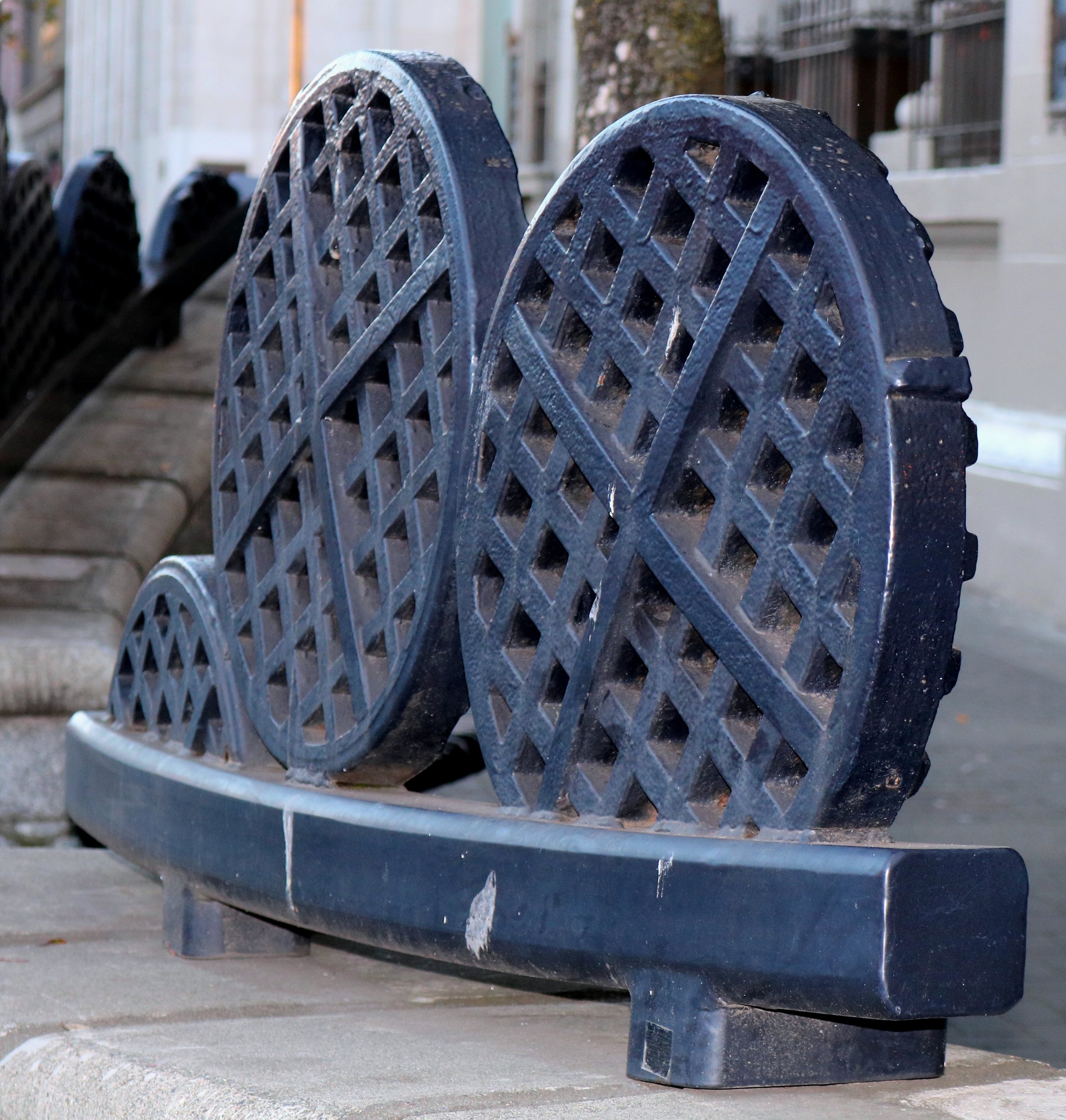
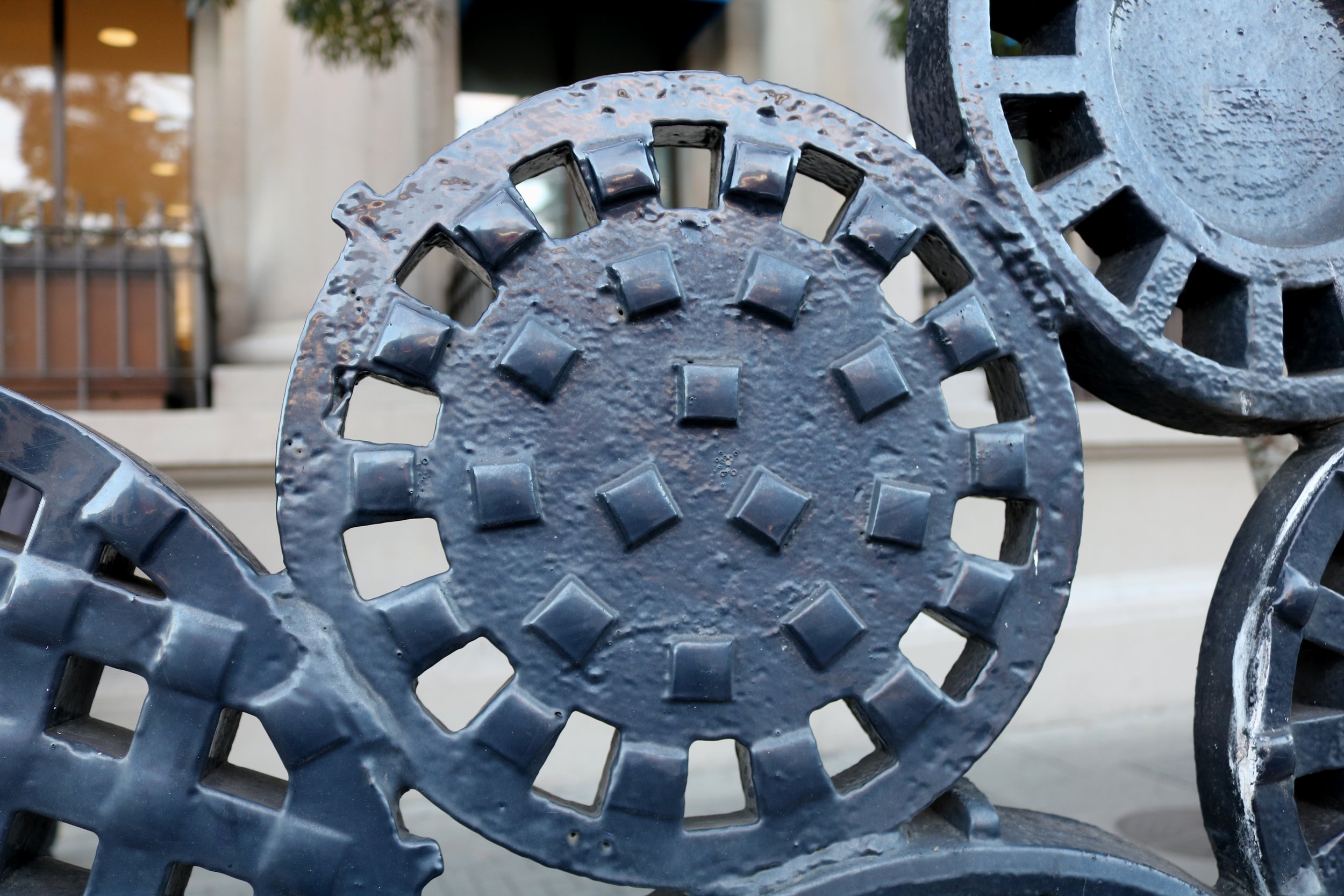
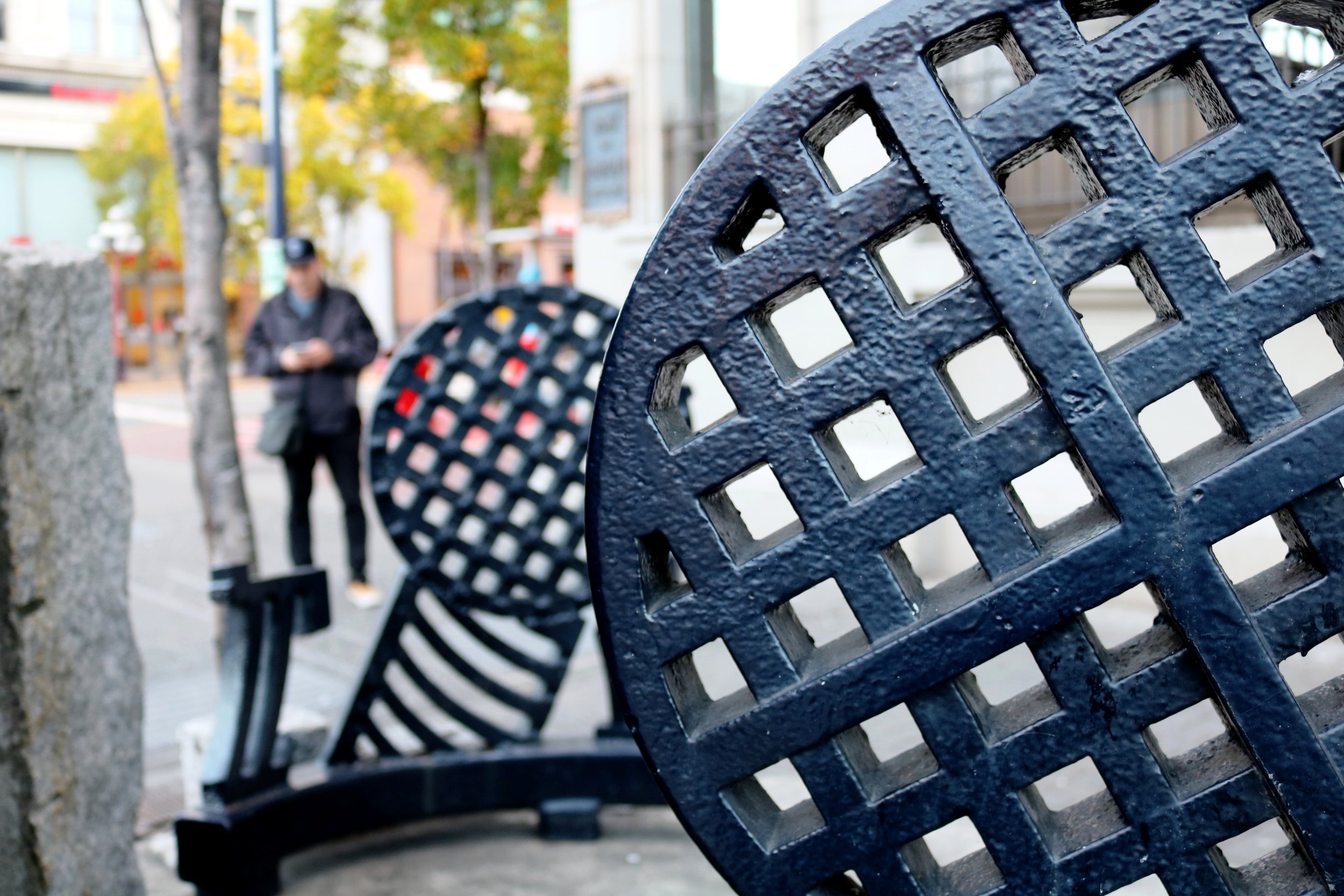
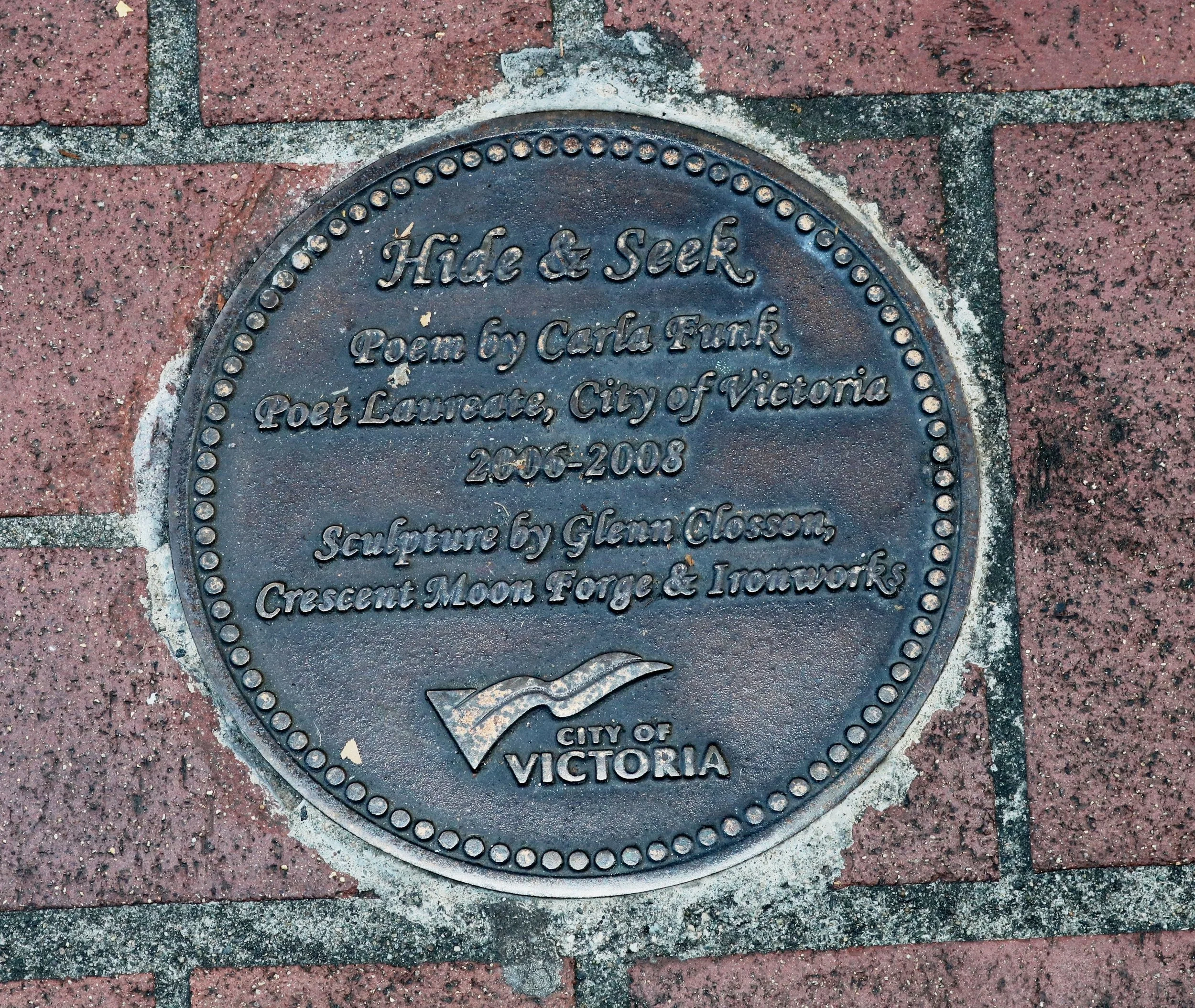
I was unreasonably — and completely — delighted to discover that the capital city of my birth province, British Columbia, honours its sewer-cover history with a public sculpture on the corner of Douglas and Yates Streets. A stack of the old waffle-pattern storm-drain covers, cast in metal and permanently lifted from the roadway, known affectionately by locals as “the Burnt Waffles.”
They are treated as heritage.
Not the grand, elevated kind that draws your gaze upward, but the kind that once sat at street level under carriage wheels, boots and rainwater.
Some of the original waffle covers still remain in situ in nearby Oak Bay. Up close you can see the square raised grid — a practical design decision from the era of horses, giving hooves enough grip to cross safely over the drains. Infrastructure shaped by the rhythm and risk of animal movement. Engineering as care.
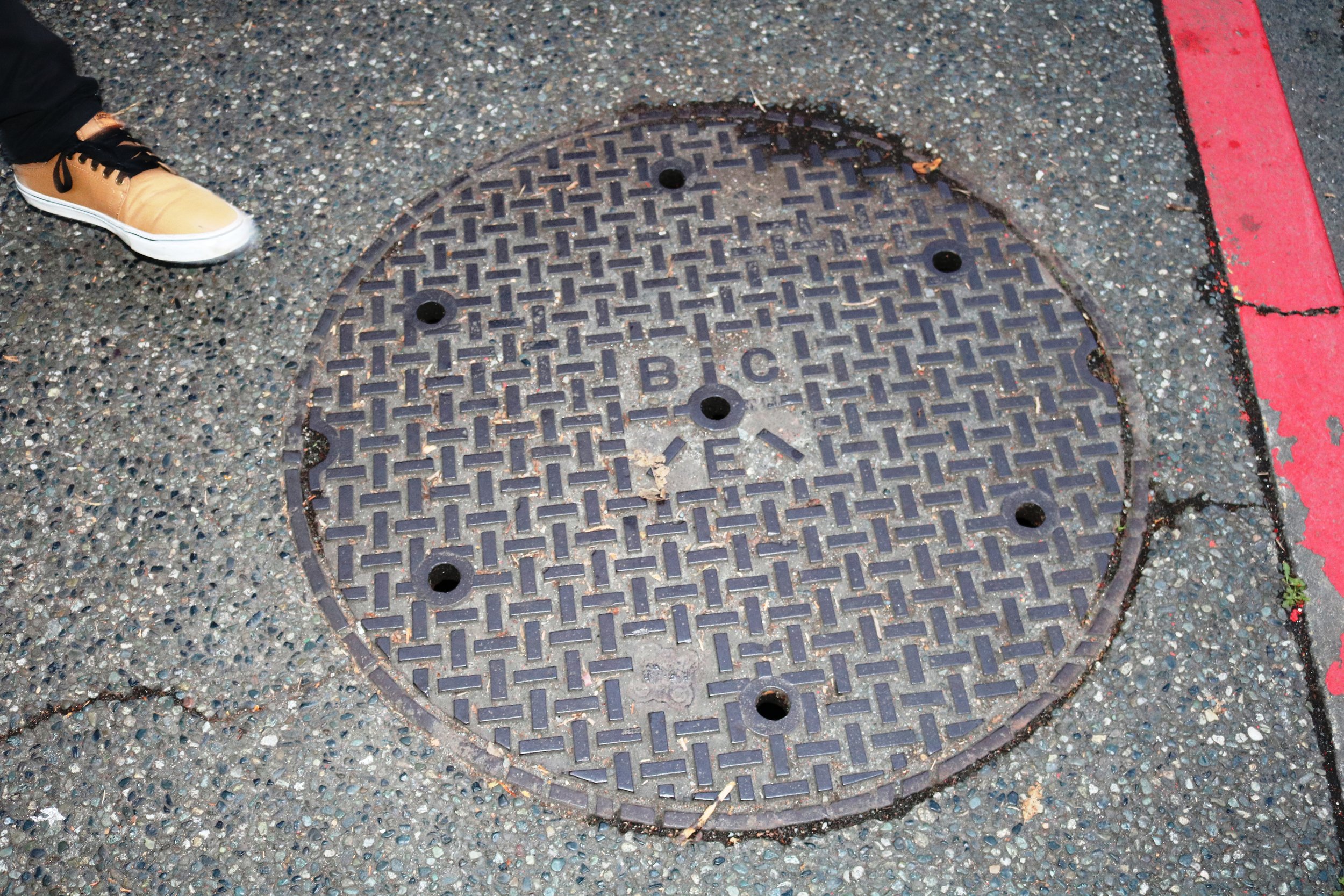
It is a different archive of the city. One that doesn’t live in monuments or official plaques, but in the patterns underfoot — in the materials, the foundry marks, the decisions made for a world that moved at another speed.
If you pay attention, a whole civic history is available this way. Not by looking up at what a city says about itself, but by looking down at what allowed it to work.