Practice
.
If unseen work stabilises institutions and leadership, it is reasonable to ask what stabilising practices look like in daily life.
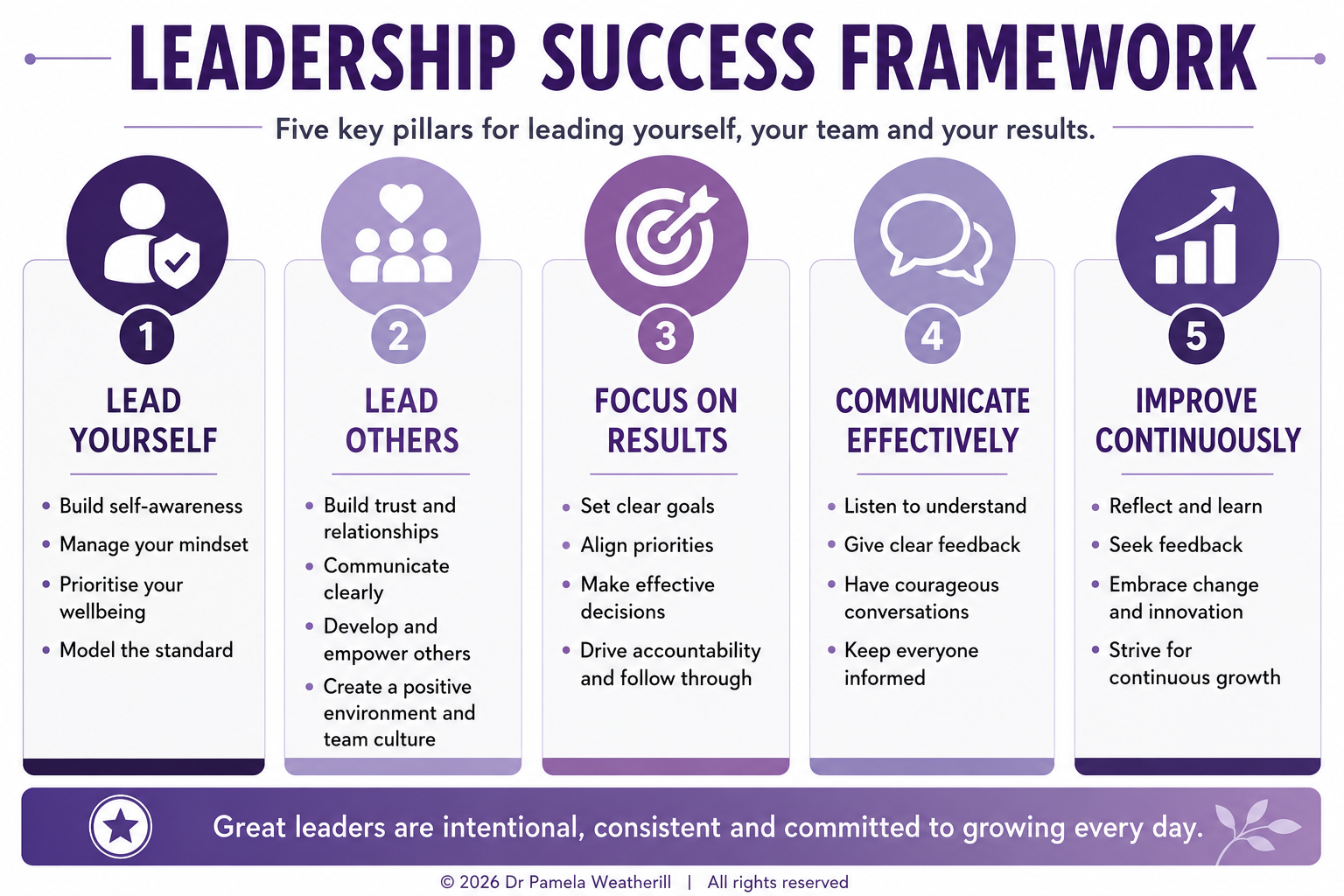
The Leadership Success Framework
The Leadership Success Framework develops five connected leadership capabilities.
The Just ONE THING Method
Large responsibilities and complex environments often create a paradox.
The more important the work becomes, the easier it is to feel overwhelmed by the number of decisions, demands, and unfinished tasks competing for attention.
The Just ONE THING Method is a reflective practice designed to reduce overwhelm and restore momentum through small, intentional actions.
It emerged from leadership and life coaching practice and from the same insight that underpins the Unseen Work Framework: that much of what stabilises systems happens through small, often invisible acts carried consistently over time.
Where the Unseen Work Framework helps name and understand this hidden labour, the Just ONE THING Method offers a way to work within it.
Rather than attempting to manage everything at once, the method brings attention back to one deliberate step.
A single action, chosen with care and followed through, can restore movement, reduce cognitive overload, and create momentum for what comes next.
Here is my foundational essay on the Just ONE THING Method and how its sits in the Unseen Work Framework.
●
The Method
The practice follows a simple rhythm that can be used each day or whenever you feel stuck or overwhelmed.
1. Choose the one thing
Pause and ask a simple question:
What single action today would move something important forward?
The step does not need to be large. Often it is simply the next meaningful part of a larger effort — writing the first paragraph, making a difficult call, preparing a document, taking a short walk, or beginning the task that has been quietly waiting.
What matters is that the action moves something, however slightly, in the direction you want to be going.
2. Remove friction
Before beginning, reduce the resistance to starting.
Ask:
What small step would make it easier to begin?
Open the document.
Lay out the materials.
Write the first sentence.
Put on your walking shoes.
Often the greatest barrier is not the work itself but the moment of initiation. Reducing friction lowers the threshold between intention and action.
3. Do the one thing
Now focus only on that one action.
Not everything.
Not the whole project.
Just the one thing.
Give it your full attention and complete the step you chose. Even small progress restores momentum and reduces overwhelm.
4. Reflect and finish the loop
At the end of the day, or after completing the action, pause again and reflect.
What happened?
What shifted?
What did you notice?
What might be the next one thing?
This reflection completes the cycle of the practice.
Over time, these small loops of choose → prepare → act → reflect build consistency, confidence, and momentum.
●
Practicing the Method
The Just ONE THING Method is designed to be used in daily life.
The journals in this series offer a simple way to hold that practice — a place to pause, choose, act, and reflect.
Each page follows the same rhythm:
Notice what matters.
Choose one thing.
Do it with attention.
Return and reflect.
Over time, this creates a steady pattern of action that makes responsibility more sustainable.
The Dot
●
Alongside the method sits a simple symbol: a dot.
The dot represents the smallest possible beginning.
It marks a pause — a brief moment to step out of momentum and notice where attention is going.
It can represent:
• a pause before action
• a place to notice what matters
• a moment of reflection
• the smallest possible beginning
• a point of attention in a busy day
• the threshold between intention and action
The dot can be drawn anywhere.
At the top of a page.
In a notebook.
In the margin of meeting notes.
Before beginning a task.
Each time it appears, it invites the same quiet question:
What is the one thing that matters most right now?
In this way the dot becomes a small anchor for attention.
A reminder that meaningful change rarely begins with dramatic gestures. More often it begins with a moment of awareness followed by one deliberate step.
From that pause, the day’s one thing often becomes clear.
●
Why small actions matter
In complex systems, stability often depends on work that is rarely visible: maintenance, care, translation, coordination, attention.
The Unseen Work Framework explores how these stabilising actions operate within institutions and leadership.
The Just ONE THING Method explores the same principle at a personal scale.
Small actions taken consistently can shift direction, restore agency, and make sustained effort possible without overwhelming the system that carries it.
In a culture that often celebrates dramatic breakthroughs, the quiet discipline of small beginnings can be surprisingly powerful.
Further reading
The ideas behind this practice are explored in a series of essays:
A PDF to support you to learn more and use this method is available. Contact me.
●
Reflection journals
The Just ONE THING reflection journals provide a simple structure for practicing this method daily, offering space to choose the day’s action, notice what happens, and reflect on progress over time. Available on Amazon.
The Leadership Success Framework
The Leadership Success Framework develops five connected leadership capabilities.