
Who is the Goddess Cloacina?
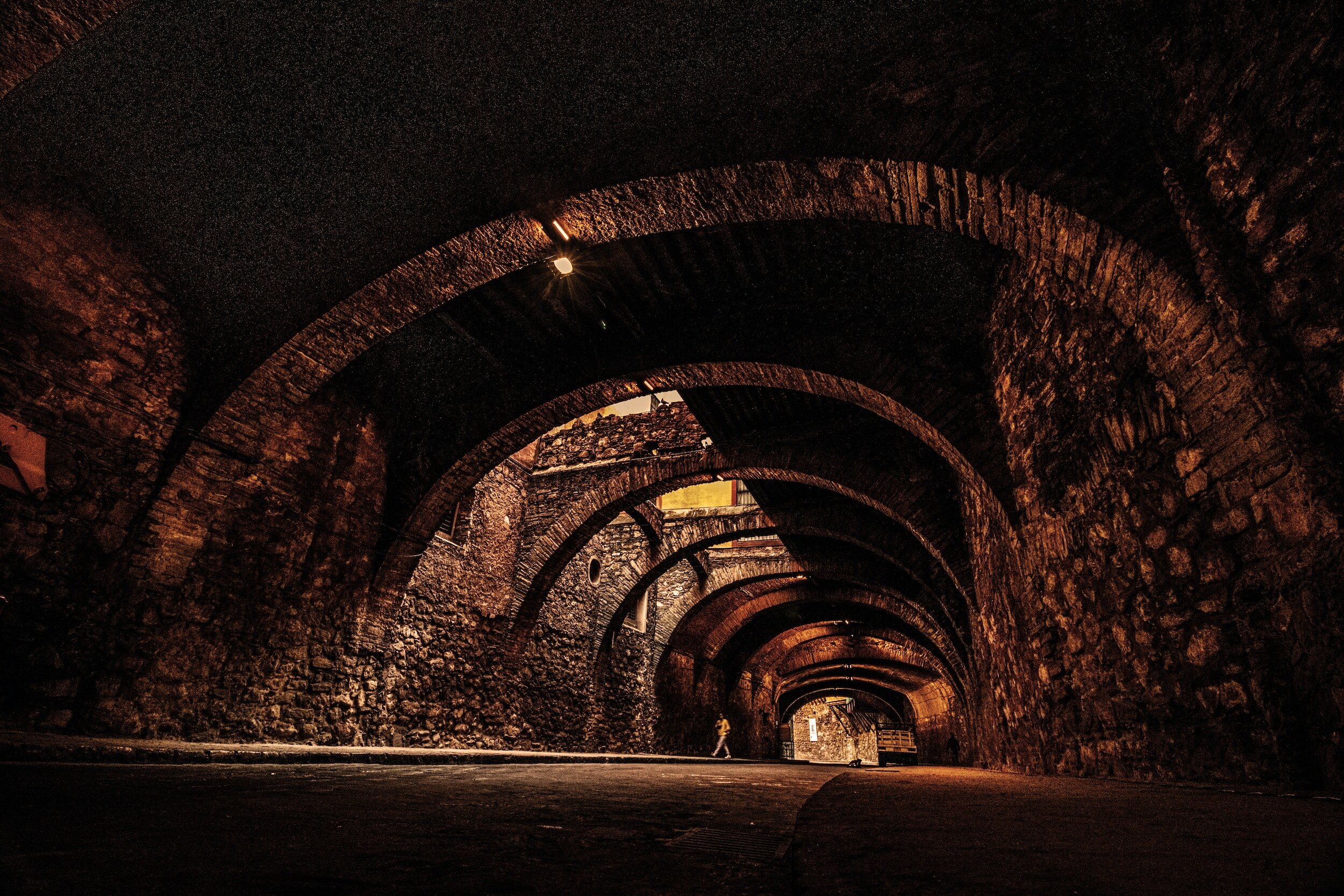

AI Generated
Cloacina
The unseen infrastructure of civic life.
Etruscan–Roman Goddess of Sewers, Purification, and the Unseen Work of Civic Life
Why Cloacina?
The Cloacina Collective takes its name from an overlooked figure in Roman civic life.
Cloacina was the goddess associated with the Cloaca Maxima, the vast sewer system that allowed the city of Rome to function. Her domain was the infrastructure beneath the city, the systems that carried away what could otherwise overwhelm it.
In this work, Cloacina becomes a symbol for a broader principle: that complex systems endure not only through visible leadership and decision-making, but through forms of labour that remain largely unseen.
The essays and frameworks developed through the Cloacina Collective explore this hidden dimension of organisational and civic life.
A little-known goddess of essential work
Cloacina was an Etruscan–Roman deity associated with the Cloaca Maxima, the vast drainage system that made dense urban life in Rome possible. This was not a marginal function.
Cloacina was, quite literally, Rome’s sewer goddess — the divine guardian of the infrastructure that carried away what the city could not survive without transforming.
The Cloaca Maxima was a sewer system which carried away waste, controlled flooding, protected public health and allowed the city above ground to endure. Without it, Rome could not have functioned as a complex civilisation.
Cloacina was the divine guardian of these systems beneath the city — the hidden infrastructure that sustained the visible life of Rome.
Her shrine in the Roman Forum
Cloacina’s shrine stood in the Roman Forum, at the centre of civic life. Its presence was a quiet acknowledgment that the health of a city depended not only on temples, laws and monuments, but on the continuous maintenance of the systems that removed what could otherwise overwhelm it.
To honour Cloacina was, in effect, to honour infrastructure and maintenance.
In Roman culture purification was not merely symbolic. It was civic. The capacity to remove contamination, restore order and maintain the functioning of the whole was understood as a public concern.
The material culture of Rome preserves this recognition. Coins depicting Venus Cloacina were minted during periods of civic tension, linking purification and reconciliation with the stability of the city. These small objects remind us that the work of removing what threatens a system was once understood as a civic responsibility.
Cloacina as symbol
Within this body of work, Cloacina functions as a symbolic lens rather than an object of devotion. She represents the stabilising processes that sustain complex systems:
• discerning and removing what is harmful
• integrating what has been neglected
• maintaining structures that allow the whole to function
The sewer is therefore more than a physical structure. It becomes an image of the unseen labour that prevents breakdown — the work that absorbs strain, processes difficulty and sustains continuity in institutions, communities and leadership.
What remains unseen
Cloacina’s realm is underground.
She names the domain that institutions and individuals often prefer not to examine: accumulated strain, neglected maintenance, unresolved tension and concentrated responsibility.
In civic life this appears as forms of labour that stabilise systems yet rarely attract recognition. These processes do not appear in organisational charts, performance metrics or leadership narratives. Yet without them, institutions gradually fragment.
To acknowledge this domain is not to cleanse superficially. It is to recognise the deeper processes through which systems maintain coherence under pressure.
When this work is ignored, strain accumulates. When it is recognised and designed for, systems stabilise and endure.
Why Cloacina matters now
Endurance is never secured at the visible level alone. It depends on systems of maintenance and forms of labour that remain largely unseen yet are essential to individual and collective wellbeing. Cloacina provides a language for recognising this dimension.
In the work of the Cloacina Collective, she serves as a conceptual bridge between ancient civic insight and contemporary organisational life — a reminder that the stability of any complex system depends on the disciplined tending of what lies beneath its visible surface.
Where unseen maintenance is recognised and supported, institutions endure and individuals flourish.
Where it is neglected, fragility accumulates.
Suggested citation
Weatherill, P. (2025). Cloacina: The unseen infrastructure of civic life. Cloacina Collective.
Read more about her in other works by Pamela:
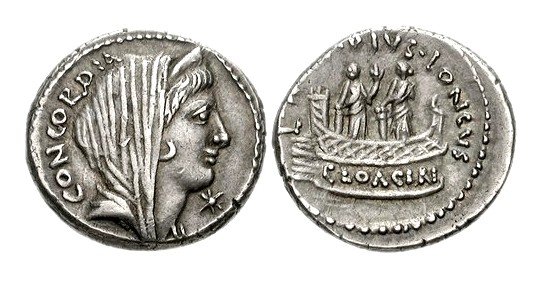
Denarius of L. Mussidius Longus (42 BC) depicting Concordia and the shrine of Venus Cloacina. Image: Classical Numismatic Group (CNG), via Wikimedia Commons, CC BY-SA 2.5.